
- Blog
- ICU Care at Home What Families Should Check Before Discharge
ICU Care at Home What Families Should Check Before Discharge
urmi care September 25, 2026
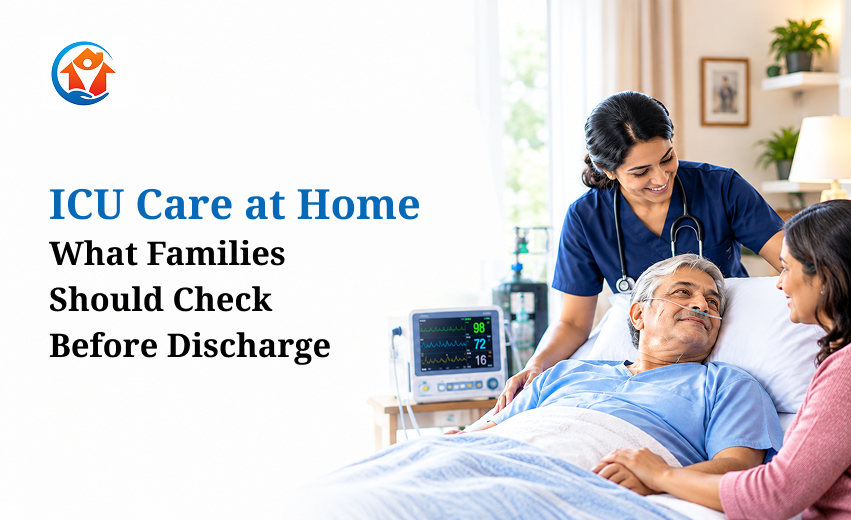
Table of Contents
Toggle
Some patients continue to need skilled nursing, close monitoring or breathing support after the hospital team considers them ready for discharge. ICU care at home may be an option when the treating doctor approves the plan and the necessary staff, equipment, home setup and emergency arrangements are in place.
Moving a patient home after critical illness requires more than arranging a bed, oxygen machine or nurse. The family needs to understand who will supervise treatment, what care the patient needs during the day and night, how the equipment will be managed, and what will happen if the patient’s condition changes.
Home ICU care also does not provide every capability of a hospital ICU. A hospital has immediate access to a larger clinical team, investigations and emergency facilities. Families should therefore make the decision with the treating team and confirm that the planned level of care matches the patient’s current needs.
What Is ICU Care at Home?
Home ICU care means providing selected intensive medical support in a patient’s home after a clinical assessment determines that home care is suitable. Depending on the patient’s condition, the plan may include skilled nursing, vital-sign monitoring, oxygen support, respiratory equipment, medication administration and regular medical review. The exact arrangement should follow the patient’s treatment plan rather than a standard package. A home ICU setup may use equipment such as cardiac monitors, infusion pumps, oxygen systems, suction equipment and ventilators. However, having this equipment at home does not by itself make the home equivalent to a hospital ICU. The healthcare team must match the equipment, staffing and monitoring plan to the patient’s needs. For patients using ventilators, the home plan also needs to address caregiver training, equipment maintenance, backup arrangements and clear instructions for responding to problems. The National Heart, Lung, and Blood Institute notes that patients and caregivers should learn how to use the ventilator and recognise serious problems before going home.When Can Home ICU Care Be Considered?
A diagnosis alone does not determine whether a patient can receive intensive care at home. Two patients with the same condition may have very different care requirements. The treating team needs to consider the patient’s current clinical stability, breathing support, monitoring needs, medicines, mobility, ability to manage equipment and risk of sudden deterioration. The team should also consider whether the home can safely support the required equipment and whether trained caregivers or healthcare professionals are available. Home ICU services may be considered for selected patients recovering after complicated surgery, patients with ongoing respiratory or cardiac conditions, some neurological or stroke patients, and people who need longer-term critical support. The existing service information also describes home-based support for these situations. The important point is that the condition alone does not establish suitability. The treating doctor and care team should decide whether the patient’s needs can be managed safely at home.Who Approves the Move From Hospital to Home?
Families should not make the decision to move a critically ill patient home based only on the availability of a home care provider. The treating hospital team should first determine whether the patient is medically ready for discharge. The family should then discuss the proposed home-care plan with the treating doctor and confirm what support the patient will need after discharge. Before the move, ask for the relevant discharge instructions, medication plan, follow-up schedule and information about any equipment the patient will need. The home-care team should use these clinical instructions when planning care. A home assessment can then help identify practical requirements such as space for equipment, electricity and backup arrangements, access for caregivers, and a suitable area for patient care. This approach makes ICU at home a continuation of an approved care plan rather than an alternative to necessary hospital treatment.What Should Families Confirm Before Starting Home ICU Care?
Families should ask practical questions before the patient leaves the hospital.Who Makes Clinical Decisions?
Find out who will make changes to medicines, respiratory support and other parts of the treatment plan. Ask whether the treating doctor will review the patient directly, remotely or through another agreed arrangement. Do not assume that a nurse or care coordinator can independently change a medical treatment plan unless the clinical arrangement specifically allows it.Who Provides the Nursing Care?
Ask what type of nurse will care for the patient, what qualifications are required for the patient’s needs, and what coverage the schedule provides. If the patient needs overnight care, confirm who will be present during those hours. Also ask what happens if the assigned nurse becomes unavailable.Who Maintains the Equipment?
Families should know who installs, checks and maintains the equipment. Ask who they should contact if a ventilator, oxygen system, monitor, suction machine or other essential equipment stops working. Keep emergency contact numbers somewhere that family members and caregivers can access quickly.What Happens During an Emergency?
Ask the provider and treating team to explain the emergency plan before discharge. The plan should identify whom to call, when to seek emergency medical help, how an ambulance will be arranged and which hospital should receive the patient if hospitalisation becomes necessary.What Equipment May a Patient Need at Home?
The equipment depends on the patient’s condition and treatment plan. A patient who only needs monitoring will have different requirements from someone who needs respiratory support. The current home ICU service page lists cardiac monitoring, infusion pumps, oxygen, suction equipment, power backup and ventilators among its possible equipment and support options. Families should ask for a clear equipment list before discharge. They should understand the purpose of each device and know which equipment is essential for the patient’s care. Equipment should also have an appropriate backup plan when a failure could place the patient at risk. For home ventilation, clinical guidance can include backup ventilators, extra oxygen, batteries and suction equipment depending on the patient’s needs. The family should not buy or operate unfamiliar medical equipment without proper instruction from the healthcare team.What Happens If the Patient Needs Ventilator Support?
Selected patients can receive ventilator support at home after assessment by their treating team. The type of breathing support matters. CPAP, BiPAP or bilevel support, and invasive ventilation are not interchangeable treatments. Each serves different clinical purposes, and the treating team should specify exactly which support the patient requires. For a patient going home with a ventilator, the plan should cover trained care, equipment use, maintenance, backup power and what to do if the patient deteriorates or the equipment fails. The patient and caregivers should receive practical training before discharge. They should understand how to operate the equipment, manage routine needs, identify warning signs and contact the appropriate healthcare professional or emergency service when required.What Happens During the Night?
Overnight care needs particular attention because a patient may require monitoring or assistance while family members are sleeping. Ask exactly what nursing coverage the care plan provides at night. Some patients may need continuous professional nursing support, while others may have a different arrangement based on their clinical needs. Families should also understand which observations the nurse will record, which changes require immediate escalation and whom the nurse should contact. If the patient uses a ventilator or other essential respiratory equipment, the overnight plan should include equipment checks and a clear response procedure for alarms, power failure or changes in the patient’s condition. Do not assume that daytime care automatically covers overnight risks.How Does Physician Supervision Work?
Medical supervision can take different forms, so families should ask for specific details. The home ICU service page states that doctors review patient progress and adjust home ICU care plans as required. Before discharge, families should confirm how those reviews will happen for their particular care plan. Ask how often the doctor will review the patient, who will communicate changes, and how quickly the doctor can be contacted when the patient’s condition changes. The nurse can observe and report clinical changes, but the patient’s medical treatment should follow the agreed clinical plan. Clear communication between the treating doctor, home-care team, patient and family helps reduce confusion about who is responsible for each part of care.How Should the Home Be Prepared?
A home ICU setup needs more than physical space for a hospital bed. Families should prepare a clean, accessible area where nurses can provide care and healthcare professionals can reach the patient easily. The home should also have the electrical supply required for the equipment and appropriate backup arrangements when necessary. If the patient uses respiratory equipment, the family should understand how the equipment connects to the power supply and what to do during a power interruption. Keep medicines, discharge instructions, emergency contacts and important medical records organised and accessible to the care team. The family should also identify who will communicate with healthcare professionals and coordinate appointments, supplies and other practical needs.How Should Infection Control Be Managed?
Home care still requires careful infection-control practices, particularly when a patient has invasive devices, wounds or respiratory equipment. Families should not treat cleaning, disinfection and sterilisation as interchangeable terms. The correct process depends on the equipment, how it is used and the level of infection risk. CDC guidance explains that different healthcare items require different levels of cleaning, disinfection or sterilisation. For example, critical devices that enter normally sterile tissue require sterilisation, while other equipment may require an appropriate level of disinfection. For home care, the healthcare team should tell the family how to clean and maintain the equipment used for the patient. The provider should also follow the manufacturer’s instructions and the clinical team’s infection-control procedures.What Happens If the Patient’s Condition Gets Worse?
Families should discuss deterioration before the patient comes home. A patient may develop changes in breathing, oxygen levels, blood pressure, consciousness or other vital signs. The care team should explain which changes require immediate medical attention and which contact number the family or nurse should use. The existing ICU service information describes emergency transfer planning, ambulance coordination and communication with the hospital when a patient needs hospitalisation. Families should ask for the actual emergency process for their patient’s care plan rather than assuming that every home-care arrangement follows the same procedure. If a serious or life-threatening emergency occurs, the family should seek emergency medical help immediately rather than waiting for a routine home-care review.Long-Term Critical Care and Palliative Care Are Different
Some patients need critical care for a longer period, while others may need palliative care because of a serious or life-limiting illness. These situations can overlap, but they do not have the same goals. Critical care at home may continue active medical support and monitoring when the patient’s clinical plan allows it. Palliative care focuses on relieving pain and other distressing symptoms, supporting quality of life, and helping patients and families cope with serious illness. It can also continue alongside treatments intended to prolong life. WHO describes palliative care as care that can begin early in serious illness rather than only at the end of life. Families should therefore discuss the goals of care with the treating team instead of assuming that long-term care automatically means comfort-only treatment.What Should Families Ask the Home ICU Provider?
Before arranging critical care services at home, families can use a simple checklist:- Who has approved the patient’s discharge?
- What clinical needs must the home team manage?
- Who makes treatment decisions?
- How often will the doctor review the patient?
- What nursing coverage will the patient receive during the day and night?
- Who replaces a nurse if the assigned nurse cannot attend?
- What equipment will the patient need?
- Who installs and maintains the equipment?
- What backup equipment or power arrangements are available?
- What training will the family receive?
- What should the family do if the patient’s condition worsens?
- Which ambulance and hospital arrangements apply to this patient?
- Who should the family contact for equipment failure?
- What infection-control procedures should the family follow?
Is Home ICU Care Right for Every Patient?
No. Home healthcare services can support selected patients, but home care cannot provide every capability available in a hospital ICU. A patient may need hospital care if they require investigations, procedures, specialist intervention or a level of monitoring that the home setup cannot safely provide. The treating team should therefore assess the patient’s clinical condition before discharge and review the home environment, staffing, equipment and emergency arrangements. Families should also understand that the care plan may change. If the patient’s condition becomes more complex, the treating team may recommend a return to hospital or a change in the level of support.A Practical Approach Before Discharge
Families can make the transition easier by completing the planning before the patient leaves the hospital. First, discuss discharge readiness with the treating team. Then obtain the discharge instructions and understand the medicines, monitoring requirements, equipment and follow-up schedule. Next, arrange the required home assessment and equipment. Confirm nursing coverage, including overnight arrangements where needed. Finally, make sure everyone knows the emergency process. The family, nurse and medical team should understand who to contact and what action to take if the patient’s condition changes. This preparation gives families a clearer understanding of what home health care can provide and where hospital care remains necessary.Conclusion
ICU care at home can support selected patients after hospital discharge when their treating team considers home care appropriate and the required clinical support is available. The decision should focus on the patient’s current condition rather than the diagnosis alone. Families should understand who supervises treatment, what nursing coverage is available, how equipment will be maintained, what happens overnight and how the team will respond to an emergency. If your family is considering home ICU care, speak with the treating doctor first and discuss the discharge plan, home requirements and emergency arrangements with the care provider. Urmi Care can help families discuss available ICU-at-home support and understand the arrangements required for the patient’s care.Frequently Asked Questions
Can every ICU patient move to home ICU care?
No. The treating team needs to assess the patient’s clinical stability, treatment needs, equipment requirements, home environment and emergency risks before approving discharge to home care.
Can a patient receive ventilator support at home?
Selected patients can receive ventilator support at home after assessment by their treating team. The plan should include trained care, appropriate equipment, equipment maintenance, backup arrangements and clear instructions for deterioration or equipment failure.
What is the difference between CPAP, BiPAP and invasive ventilation?
They provide different forms of breathing support. CPAP provides continuous positive airway pressure, while BiPAP or bilevel support provides different pressure levels during breathing. Invasive ventilation uses an airway device such as an endotracheal tube or tracheostomy. The treating team should decide which form of support a patient needs.
Does home ICU care provide the same support as a hospital ICU?
No. Home ICU care can provide selected monitoring, nursing, respiratory and medical support, but a home does not have all the equipment, investigations, specialist teams and emergency facilities available in a hospital ICU. The treating team should decide whether home care can safely meet the patient’s needs.
What should families check before arranging ICU care at home?
Families should confirm discharge approval, clinical supervision, nursing coverage, overnight arrangements, required equipment, equipment maintenance, backup power, caregiver training and the emergency hospital-transfer plan. They should also obtain clear instructions about medicines, monitoring and when to seek emergency help.
Categories :
ICU care at home