
How Critical Care at Home Can Support Patient Recovery
urmi care October 1, 2026

Critical illness is hard on both patients and their families. After an ICU stay, surgery, serious infection, breathing problem, stroke or heart-related condition, some patients still need close medical attention once they’re back home. This is where Critical Care Services at Home can help. With the right medical team, monitoring equipment, nursing support and doctor coordination, patients can continue receiving close care in a familiar home environment. Urmi Care provides home-based critical care with ICU-trained nurses, medical equipment, monitoring, clinical reporting and emergency coordination based on the patient’s needs. What Are Critical Care Services at Home? Critical Care Services at Home provide ongoing medical and nursing support to patients who need close observation outside a hospital. The level of care depends on the patient’s medical condition and the treatment plan prepared by the treating doctor. Home Critical Care can include regular monitoring of vital signs, medication administration, breathing support, infection
Read MoreICU Care at Home What Families Should Check Before Discharge
urmi care September 25, 2026
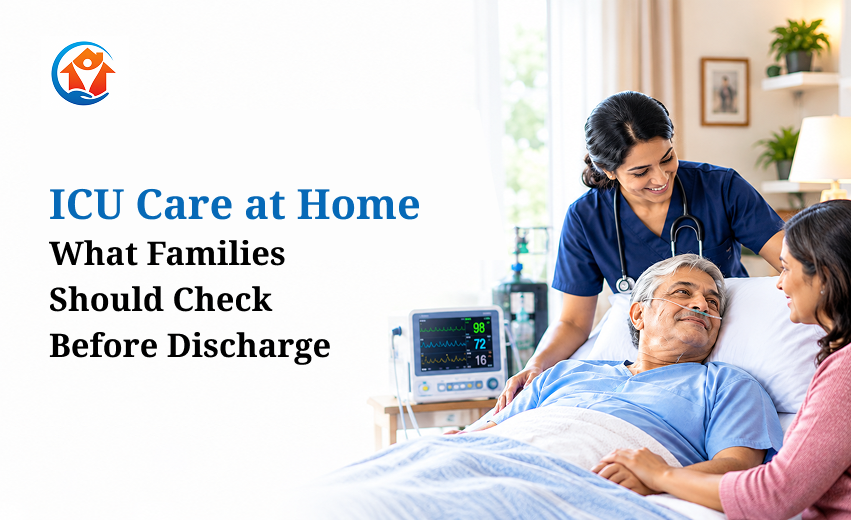
Some patients continue to need skilled nursing, close monitoring or breathing support after the hospital team considers them ready for discharge. ICU care at home may be an option when the treating doctor approves the plan and the necessary staff, equipment, home setup and emergency arrangements are in place. Moving a patient home after critical illness requires more than arranging a bed, oxygen machine or nurse. The family needs to understand who will supervise treatment, what care the patient needs during the day and night, how the equipment will be managed, and what will happen if the patient’s condition changes. Home ICU care also does not provide every capability of a hospital ICU. A hospital has immediate access to a larger clinical team, investigations and emergency facilities. Families should therefore make the decision with the treating team and confirm that the planned level of care matches the patient’s current needs.
Read More